

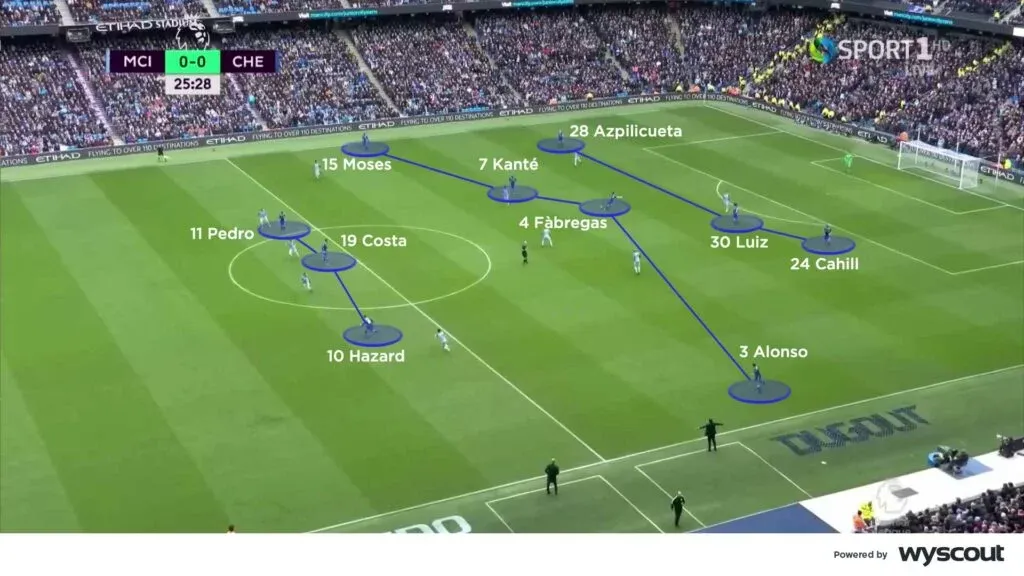
Tactical Formation 4-3-3 has long been considered the pinnacle of offensive football, providing a blueprint for some of the most dominant teams in the history of the sport. If you have ever sat in a stadium and watched a team effortlessly slice through their opposition with triangular passing, you were likely witnessing the magic of this system. It is a setup that prioritizes space, movement, and technical proficiency above all else.
The beauty of this tactical approach lies in its inherent balance and the way it naturally creates passing lanes across every zone of the pitch. Unlike the more rigid structures of the past, this formation allows for a high degree of fluidity, where players are encouraged to rotate positions and exploit gaps. It is a philosophy thatdemands high intelligence from every player on the field, from the goalkeeper to the central striker.
Historically, the roots of this system can be traced back to the Total Football era of the 1970s, where the Dutch national team and Ajax redefined how we think about player roles. They moved away from fixed positions, embracing a style where a defender could become an attacker in an instant. This evolution paved the way for the modern iterations we see today in the world’s most competitive leagues.
When we break down the structure, we see four defenders, three midfielders, and three forwards, but these numbers only tell a small part of the story. The real strength of the system is found in the relationships between these players. Each individual is part of multiple triangles, ensuring that the player in possession always has at least two immediate options for a pass.
The Anatomy of the Tactical Formation 4-3-3
At the base of this system is the back four, which serves as the foundation for every attacking move. In a modern context, the center-backs are no longer just stoppers; they are the primary playmakers who initiate the buildup from the defensive third. They must be comfortable on the ball and capable of playing long, cross-field diagonals or sharp vertical passes into the midfield.
The full-backs in this setup are perhaps the most physically demanding roles in modern football. They are expected to provide the width that the formation sometimes lacks in the middle of the pitch. By overlapping the wingers, they create numerical advantages on the flanks, forcing the opposition to stretch their defensive line and leaving gaps in the central areas.
Moving into the engine room, the midfield trio is the heart of the entire operation. Typically, this consists of one deep-lying playmaker, often referred to as the “pivot,” and two more advanced “interiors.” The pivot is the conductor, sitting just in front of the defense to provide protection while also directing the tempo of the game with their distribution.
The two advanced midfielders, often called the number eights, are responsible for linking the defense to the attack. They operate in the “half-spaces,” which are the vertical strips of the pitch between the center and the wings. These players must possess incredible vision and the stamina to move from box to box, supporting both the defensive transition and the final third penetration.
The front three is where the most visible damage is done to the opposition. In a standard Tactical Formation 4-3-3, you have two wide forwards and one central striker. However, the roles of these players have evolved significantly. We now frequently see “inverted wingers” who cut inside onto their stronger foot to shoot, rather than staying wide to deliver crosses.
The central striker in this system often faces a choice between being a traditional “target man” or a “false nine.” A false nine will drop deep into the midfield, dragging the opposition center-backs out of position and creating space for the wide forwards to sprint into. This tactical nuance was famously mastered by Lionel Messi during his time at Barcelona under Pep Guardiola.
Evolution and Mastery of the Tactical Formation 4-3-3
One of the most critical aspects of making this formation work is the concept of the high press. Because the team is naturally spread out across the pitch, they are in a perfect position to hunt the ball in packs the moment they lose it. This “gegenpressing” style, popularized by coaches like Jurgen Klopp, relies on the front six players cutting off passing lanes and forcing errors deep in the opponent’s half.
When the press is executed correctly, the opposition feels suffocated, unable to play their way out of defense. This leads to high-turnover situations where the attacking team can strike while the defenders are still out of their recovery positions. It is a high-risk, high-reward strategy that requires elite fitness levels and perfect synchronization between the players.
Defensively, the Tactical Formation 4-3-3 can easily transition into a 4-1-4-1 or a 4-5-1 when the team does not have the ball. The wingers drop back to align with the midfielders, creating a compact block that is difficult to break through. This versatility makes the system popular among coaches who want to dominate possession but also remain solid when they are under pressure.
However, the system is not without its vulnerabilities. One of the most common ways to beat this formation is through quick counter-attacks that exploit the space left behind by the attacking full-backs. If the defensive midfielder is caught out of position or bypassed, the two center-backs can find themselves isolated against multiple attackers, leading to dangerous situations.
Another challenge is the physical toll it takes on the midfield. Because there are only three players in the center, they can sometimes be overrun by teams playing a four or five-man midfield. To combat this, the “interiors” must be extremely disciplined in their positioning, ensuring they do not leave too much space between themselves and the holding midfielder.
In recent years, we have seen the emergence of the “inverted full-back” as a solution to these defensive issues. Instead of overlapping on the wing, a full-back will tuck into the midfield alongside the pivot during the buildup phase. This creates a “box” midfield of four players, giving the team more security against counter-attacks while still allowing the front five to stay high and wide.
Training players to excel in this system requires a focus on “positional play,” or Juego de Posición. This training methodology teaches players to recognize where they should be in relation to the ball, their teammates, and the opponents. The goal is to always maintain a structure that maximizes the team’s ability to keep the ball and move the opposition out of their defensive shape.
The role of the goalkeeper has also been transformed by the Tactical Formation 4-3-3. Modern keepers are expected to act as an “eleventh outfielder,” helping to recycle possession and even providing long-range assists. Their ability to remain calm under pressure while being chased by opposing strikers is vital for a team that wants to build from the back.
When we look at the most successful teams of the last decade, almost all of them have used some variation of this setup. Real Madrid’s three consecutive Champions League titles were built on a midfield trio of Casemiro, Modric, and Kroos, which perfectly exemplified the balance required for the system. One provided the grit, one provided the vision, and one provided the control.
Similarly, Manchester City’s domestic dominance is rooted in a highly refined version of this formation. Their use of “free eights”—creative midfielders who have the license to roam and join the attack—has made them almost impossible to defend against. They use the width provided by their wingers to stretch the defense until a gap appears in the middle for a late-running midfielder to exploit.
For amateur coaches or tactical enthusiasts, implementing a Tactical Formation 4-3-3 can be a daunting task. It requires players who are not only technically gifted but also tactically aware. You cannot simply tell three players to stand in the middle and hope for the best; they must understand the triggers for when to press, when to hold their position, and when to make a run into the box.
Communication is the glue that holds this formation together. Because the players are often rotating and switching positions, they must constantly talk to each other to ensure that no areas of the pitch are left uncovered. A winger who tracks back to help their full-back must be replaced in the attacking line by a surging midfielder to maintain the threat on the opposition goal.
The psychological impact on the opposition should also be considered. Playing against a well-drilled team in this formation can be exhausting. The constant movement and the endless carousel of passing can demoralize a defensive unit, eventually leading to a lapse in concentration. It is as much a test of mental endurance as it is a test of physical skill.
As football continues to evolve, we are seeing more hybrid systems that blend elements of this formation with others. Some teams might start in a 4-3-3 but shift into a 3-2-5 when they are in the attacking phase. This flexibility is a testament to the strength of the original design, which provides a clear and logical framework for modern tactical innovation.
The future of the game will likely see even more emphasis on the individual’s ability to play multiple roles within the 4-3-3 structure. We are already seeing “midfielders” who can play as center-backs and “wingers” who can operate as central playmakers. This “universality” of players is the ultimate realization of the Total Football dream that started the journey toward this formation decades ago.
Analyzing the statistics of teams that use this setup often reveals high possession percentages and high numbers of “passes into the final third.” However, the most successful teams also rank high in “recoveries in the attacking half.” This shows that the formation is not just about having the ball; it is about how you act when you don’t have it, using your positioning to dictate the game.
The transition from a youth setup to a professional 4-3-3 is often where many talented players struggle. In youth football, physical superiority can often mask tactical deficiencies. In the professional game, however, the margins are so thin that being five yards out of position can result in a conceded goal. This is why top academies focus so heavily on tactical education from a young age.
Scouting for a Tactical Formation 4-3-3 requires a specific eye for “profile players.” You aren’t just looking for a good midfielder; you are looking for a “number six” who can read the game three steps ahead or a “number eight” who can receive the ball on the turn under heavy pressure. Each role has a specific set of requirements that must be met for the entire system to function correctly.
The relationship between the coach and the players is also vital. Because this system allows for a degree of creative freedom, the players must trust the coach’s tactical framework. They need to believe that by staying in their designated zones and following the passing patterns, they will eventually find the breakthrough. This belief is what carries teams through difficult matches where the opposition is sitting deep.
We often hear pundits talk about “the weight of the pass” or “playing between the lines.” These concepts are the bread and butter of this formation. A pass that is slightly too slow or a player who is standing too close to their marker can disrupt the entire rhythm of the team. Precision is the currency of the 4-3-3, and those who spend it wisely are the ones who lift the trophies.
The evolution of technology has also played a role in how this formation is taught and executed. Coaches now have access to real-time data and video analysis that allows them to show players exactly where the gaps were during a match. This feedback loop helps players internalize the complex movements required, making the team more cohesive with every game they play together.
Looking at the global landscape, the 4-3-3 has become the “standard” for teams that want to be proactive. Whether it is a national team in a World Cup or a local club in a regional league, the desire to play attractive, attacking football usually leads back to this specific arrangement of players. It represents an ambition to take the game to the opponent rather than waiting for them to make a mistake.
The debate over the “best” formation will always exist in football, as there is no single answer that fits every situation. However, the longevity and success of the 4-3-3 suggest that it is more than just a passing trend. It is a fundamental way of organizing a team that aligns with the very essence of what makes football the beautiful game: space, movement, and the pursuit of the perfect goal.
As new generations of coaches emerge, they will undoubtedly find new ways to tweak and improve the system. We might see more emphasis on verticality or perhaps a return to more traditional roles in certain areas. But the core principles of the Tactical Formation 4-3-3—the triangles, the width, and the midfield control—will likely remain the gold standard for many years to come.
Ultimately, the success of any tactic depends on the players’ ability to execute it under the lights on a Saturday afternoon. The 4-3-3 provides the map, but the players provide the journey. It is a system that rewards bravery, rewards technique, and above all, rewards the collective effort over individual glory. When it all clicks into place, there is truly nothing else quite like it in the world of sport.
Read also :-
villarreal cf vs fc barcelona lineups
vissel kobe vs fc barcelona lineups
odisha fc vs fc goa lineups
atalanta bc vs bologna fc lineups