

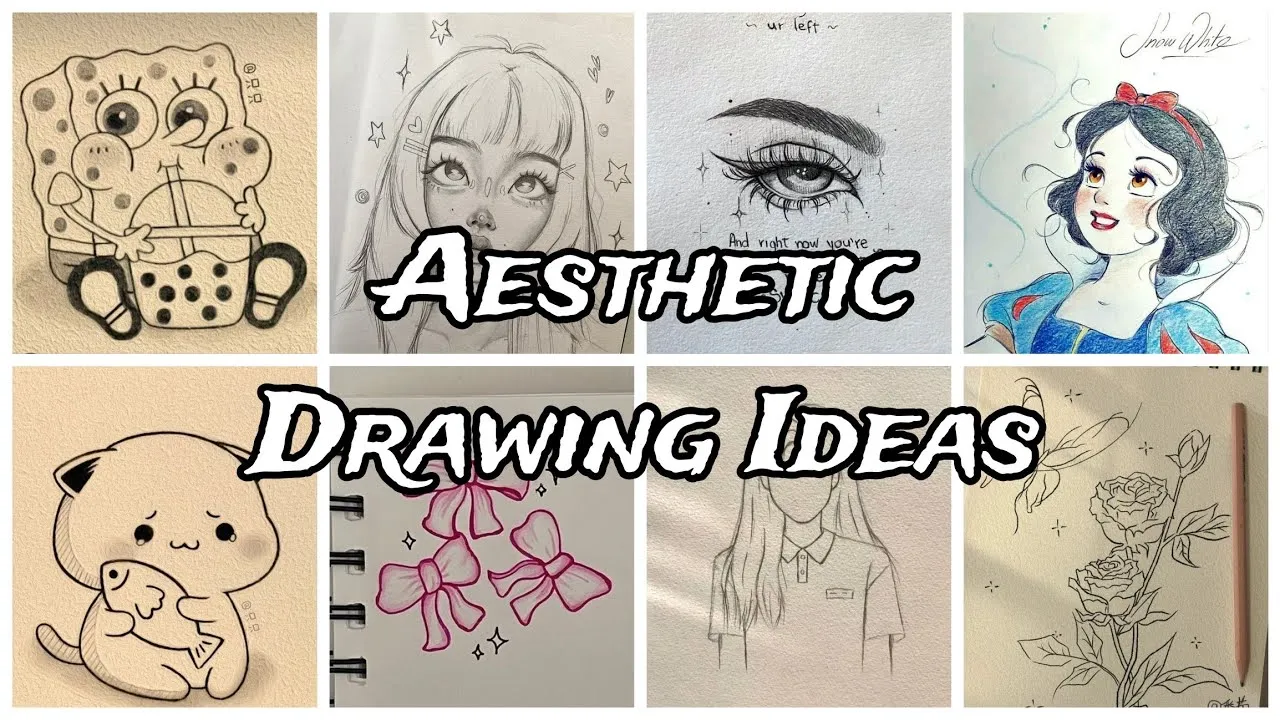
easy aesthetic drawing ideas are the perfect starting point for anyone looking to bridge the gap between a blank page and a beautiful piece of art without the pressure of achieving hyper-realistic perfection. I remember sitting at my desk during a particularly rainy Tuesday afternoon, staring at a sketchbook that had been empty for months. I wanted to create something that felt “vibey”—the kind of art you see on lo-fi study playlists or minimalist Pinterest boards—but I felt intimidated by my lack of technical training. It was only when I realized that aesthetic art is more about mood, composition, and simplicity than it is about complex anatomy or perspective that I finally felt free to put pen to paper.
The beauty of the “aesthetic” movement in the art world is that it celebrates the small, the quiet, and the cozy. It invites you to look at everyday objects through a lens of soft colors, thin lines, and intentional whitespace. Whether you are using a digital tablet like an iPad with Procreate or a simple ballpoint pen and a napkin, the goal is the same: to capture a feeling. This guide is designed to provide you with a wealth of inspiration that requires very little equipment and even less experience, allowing you to enjoy the meditative process of drawing.
Many people hesitate to start drawing because they feel they lack “talent.” However, art is a skill that is honed through the simple act of showing up. By focusing on simple shapes and minimalist themes, you can build your confidence while creating pieces that are genuinely pleasing to the eye. The following sections will explore various themes that fit into this category, providing you with a roadmap to navigate your creative journey with ease and joy.
Exploring the World of Minimalist Botanical Sketches
The first set of easy aesthetic drawing ideas revolves around the natural world, specifically the delicate beauty of plants and flowers. Botanical line art is incredibly forgiving because nature itself is wonderfully imperfect. You can start by drawing a single, long, curved line to represent a stem. From there, add small, oval-shaped leaves at varying intervals along the stem. The key to making this look “aesthetic” is to keep the lines thin and the shapes simple. Avoid overcomplicating the veins of the leaves; often, a single line through the center is all you need to convey the form.
Hanging plants are another fantastic subject for beginners. You can draw a simple terracotta pot using two slightly curved lines for the rim and a “U” shape for the base. From the top of the pot, draw several “string” lines that vary in length. Along these strings, you can draw tiny hearts or pearls to create a “String of Hearts” or “String of Pearls” plant. Because these plants naturally drape and overlap, you don’t have to worry about perfect symmetry. The slight irregularities actually add to the charm and make the drawing feel more organic and authentic.
If you want to try something slightly more detailed but still very approachable, consider drawing a single wildflower. Start with a tiny circle or a cluster of dots for the center, and then draw long, teardrop-shaped petals radiating outward. You don’t need a full bouquet to make a statement; a single flower placed off-center on your page creates a minimalist, high-fashion look. This approach allows you to focus on the elegance of the line rather than the complexity of a whole arrangement, making it a staple in the world of modern aesthetic sketching.
Celestial Themes and Cosmic Simplicity
Moving from the earth to the sky, celestial bodies offer an endless supply of inspiration for those seeking a dreamy or mystical vibe. A crescent moon is perhaps one of the most iconic aesthetic symbols. You can draw this by creating two overlapping “C” shapes. To elevate the drawing, you can add tiny, five-pointed stars or even just simple crosses and dots around the moon to represent a sparkling night sky. This type of drawing works beautifully with a gold or silver gel pen on dark paper, but a simple black fineliner on white paper looks just as classic.
Clouds are another subject that can be surprisingly easy once you let go of the need to make them look “fluffy” in a traditional way. Aesthetic clouds often use a “flat bottom” style, where you draw a straight horizontal line and then add various sizes of rounded bumps on top. To add a bit of flair, you can draw tiny sparkles or a small sun peeking out from behind the cloud. This stylized version of a cloud is much easier to master than trying to shade a realistic cumulus cloud, and it fits perfectly into the lo-fi aesthetic that is so popular today.
You might also consider drawing a simple “galaxy in a jar.” Draw a classic mason jar shape and, instead of filling it with liquid, fill the inside with tiny stars, moons, and swirling lines to represent the cosmos. This idea combines the domestic comfort of a household object with the vast mystery of space. It is a great exercise in composition because you are working within a defined boundary, which often makes the creative process feel less overwhelming for those who are just starting out.
Finding Beauty in Daily Objects
When looking for easy aesthetic drawing ideas, you truly don’t need to look further than your own coffee table or bedside stand. Everyday objects, when drawn with a minimalist touch, can become deeply evocative. Take a coffee mug, for example. You can draw a simple cylinder with a curved handle. To make it “aesthetic,” add three or four thin, wavy lines rising from the top to represent steam. You can even add a small heart or a tiny star on the side of the mug to give it a bit of personality. This represents the “cozy” side of art, reminding the viewer of quiet mornings and warm drinks.
Books are another wonderful subject. You can draw a stack of three books by creating three rectangles stacked on top of each other. To give them more character, draw a few small leaves or flowers “growing” out from between the pages. This “cottagecore” aesthetic is very popular and suggests a deep love for nature and literature. It transforms a boring object into something magical and narrative-driven. The lines remain straight and simple, but the addition of the organic elements makes the drawing feel sophisticated and thoughtful.
A classic Polaroid camera or just a single Polaroid photo frame is a quintessential aesthetic drawing. For a single photo, draw a square with a slightly larger border at the bottom. Inside the square, you can sketch a very simple landscape, like a single mountain and a sun. This “meta” approach to art—drawing a picture within a picture—is very popular in contemporary design. It allows you to practice different types of drawing on a very small, manageable scale, which is perfect for building your skills without feeling burnt out.
Easy Aesthetic Drawing Ideas for Minimalist Portraits
Portraits can be the most intimidating subject for any artist, but the aesthetic movement has introduced a style that makes it accessible to everyone: the “blind contour” or “continuous line” portrait. Instead of worrying about perfect features, you focus on the silhouette and the general flow of the face. You can draw a profile view by using one long, sweeping line to define the forehead, nose, lips, and chin. Often, these drawings leave out the eyes or only include a single, simple line for an eyelash. This creates a high-end, gallery-style look that is incredibly stylish and very easy to achieve.
Another fun idea is to draw a hand holding something delicate, like a flower or a butterfly. Hands are notoriously difficult to draw, but in this style, you can simplify them into basic shapes. Focus on the gesture rather than the anatomy. Think of the fingers as soft, rounded rectangles. When the hand is shown interacting with a beautiful object, the viewer’s eye is drawn to the overall composition rather than any minor anatomical errors. This is a great way to practice drawing more complex forms in a low-stakes environment.
You might also explore the “faceless” portrait style, where you draw the hair and the outfit of a person but leave the face blank or just add a few simple lines for the eyebrows. This allows the viewer to project themselves into the drawing and focuses the attention on the fashion and the hairstyle. It is a very common technique in digital illustration and translates perfectly to traditional paper and pen. It removes the most difficult part of the portrait—the eyes and nose—while still allowing you to create a piece that feels human and relatable.
Using Abstract Shapes to Build Confidence
If you are still feeling a bit nervous about drawing recognizable objects, abstract art is your best friend. Many easy aesthetic drawing ideas aren’t “things” at all, but rather combinations of shapes and colors. You can start by drawing several “blobs” or organic, pebble-like shapes across your page. Fill some with solid color and leave others as outlines. Then, overlay these shapes with thin, black lines—perhaps a few wavy lines or some geometric triangles. This layered look is very modern and is a staple in contemporary interior design.
The key to abstract aesthetic art is the color palette. Using muted, earthy tones like terracotta, sage green, dusty rose, and mustard yellow can make even the simplest shapes look professional. You can experiment with overlapping transparent shapes if you are using watercolors or digital tools. This teaches you about transparency, layering, and balance without the pressure of having to make something look like a “real” object. It is a pure exploration of form and color that is incredibly relaxing.
You can also try “zentangle” inspired patterns but with a minimalist twist. Instead of filling a whole page with intricate patterns, choose a single shape, like a large circle, and divide it into sections. Fill each section with a very simple pattern, like parallel lines, small dots, or tiny checkmarks. This repetitive motion is highly meditative and can help reduce anxiety. It is a form of art that anyone can do, regardless of their skill level, and the results are always surprisingly beautiful and sophisticated.
Setting the Right Environment for Your Creative Session
When you are exploring easy aesthetic drawing ideas, the environment in which you work is almost as important as the drawing itself. The “aesthetic” is a holistic experience. I find that I am much more creative when I have a clear workspace, a warm cup of tea, and some soft music playing in the background. Lighting also plays a huge role; natural sunlight is best, but a warm desk lamp can create a cozy atmosphere during the evening. By treating your drawing time as a special ritual, you are more likely to stay focused and enjoy the process.
It is also helpful to have the right tools, but you don’t need to spend a lot of money. A high-quality fineliner pen, a good pencil, and a sketchbook with thick, smooth paper can make a big difference. If you are drawing digitally, find a brush that mimics the feel of a real pen or pencil. Having tools that feel good in your hand makes the act of drawing more tactile and satisfying. However, remember that the most important tool is your own imagination and your willingness to experiment.
Don’t be afraid to keep a “messy” sketchbook where you can test out ideas before putting them on a clean page. This removes the “fear of the first page” and allows you to fail privately. Every artist has a pile of drawings they aren’t proud of; it is a natural part of the learning process. The more you allow yourself to make mistakes, the faster you will discover your own unique style. Art is a journey, not a destination, and every mark you make on the page is a step forward.
Overcoming Common Artistic Roadblocks
One of the most common issues beginners face is the “perfectionist trap.” We see beautiful art on social media and feel discouraged because our first attempt doesn’t look like that. It is important to remember that most artists only share their best work, not the hundreds of sketches that didn’t work out. When you are trying out these ideas, give yourself permission to be a beginner. The “aesthetic” style is inherently minimalist, which means that even a few simple lines can be successful.
If you find yourself stuck, try a “timed” drawing session. Set a timer for five minutes and see how many tiny moons or leaves you can draw. This removes the pressure to make one perfect piece and encourages a more playful, experimental mindset. You can also try drawing with your non-dominant hand to embrace the “wobbly” lines that are actually quite popular in certain aesthetic styles. It is a great way to break out of your comfort zone and find beauty in the unexpected.
Another great way to find inspiration is to look at the world around you with “artist eyes.” Look at the shadow a plant casts on a wall or the way the steam rises from a bowl of soup. These fleeting moments are the heart of the aesthetic movement. By training yourself to notice these small details, you will never run out of things to draw. Your sketchbook becomes a record of the beauty you have found in your daily life, making it a precious personal document.
The Transition from Analog to Digital Art
While there is something irreplaceable about the feel of paper, many artists are moving toward digital platforms for their aesthetic sketches. Apps like Procreate or Adobe Fresco offer tools that make it incredibly easy to experiment with color and composition. You can use layers to test different ideas without ruining your original sketch, and the “undo” button is a lifesaver for perfectionists. Many digital artists use “paper texture” overlays to give their work a more traditional, tactile feel.
Digital art also makes it very easy to share your work with a wider audience. You can export your drawings as high-quality images and post them on platforms like Instagram or Pinterest. This can be a great way to connect with other artists and find a supportive community. However, don’t let the desire for “likes” dictate your creative process. The most important audience for your art is always yourself. If you are happy with what you have created, then it is a success.
Whether you choose digital or analog, the core principles of aesthetic drawing remain the same. It is about simplicity, mood, and the joy of creation. By starting with these easy ideas, you are building a foundation for a lifelong love of art. There is no right or wrong way to be creative; there is only your way. So, grab a pen, find a cozy spot, and see where your imagination takes you today. The world is full of beauty just waiting to be captured on your page.