

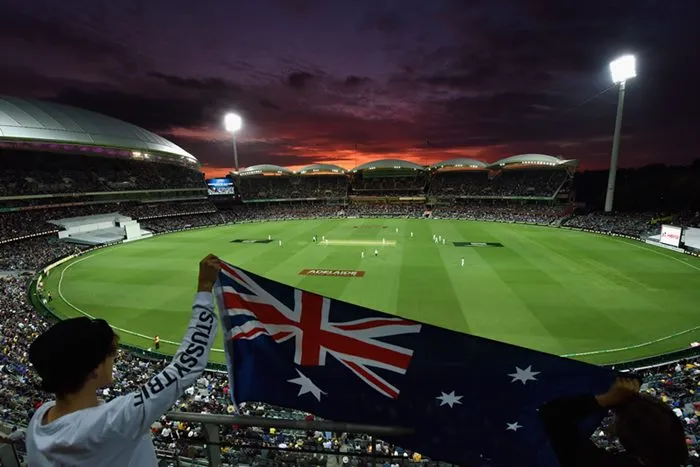
Day-Night Test Fixtures represent cricket’s boldest experiment in modernizing its oldest and most traditional format, bringing floodlit drama to five-day matches that previously ended each evening at six o’clock. As someone who attended the inaugural day-night Test between Australia and New Zealand at Adelaide Oval in 2015, I can tell you the atmosphere felt electric in ways that traditional Test cricket rarely achieves, with sold-out crowds staying late into warm summer evenings to watch cricket under lights.
The innovation emerged from cricket administrators’ concerns that Test cricket was losing relevance among younger audiences and struggling to fill stadiums during weekday afternoon sessions. The solution seemed radical at the time: shift session times later in the day, play under floodlights, and use a pink ball designed to remain visible under artificial lighting. Critics predicted disaster, arguing that messing with Test cricket’s sacred traditions would destroy the format’s essence.
Instead, day-night Tests have proven remarkably successful in specific markets while revealing complexities that prevent universal adoption. The format attracts larger crowds, generates better television ratings in key time zones, and creates unique tactical challenges that players find genuinely engaging. However, the pink ball’s behavior, particularly during twilight periods, has sparked debates about whether the format provides fair contests between bat and ball.
The Pink Ball Science and Controversy
The Kookaburra pink ball used in most day-night Tests required years of development to meet the contradictory demands of Test cricket. It needed to remain visible under floodlights while retaining the durability and swing characteristics that red balls provide across 80-over innings. The pink dye and extra lacquer coating designed to achieve these goals fundamentally altered how the ball behaves, creating advantages for bowlers that many batsmen consider excessive.
Early pink ball Tests produced spectacular bowling performances and batting collapses that raised questions about competitive balance. The 2016 day-night Test between Australia and South Africa at Adelaide ended within three days, with 54 wickets falling in barely 200 overs of play. Batsmen complained that the ball swung excessively and behaved unpredictably, particularly during the twilight period when natural and artificial light combined.
The twilight factor has become day-night cricket’s defining tactical element. The hour or so when sunlight fades and floodlights take over creates atmospheric conditions where the pink ball swings dramatically. Captains now win tosses and specifically choose to bowl during these periods, recognizing the massive advantages that physics and meteorology provide their pace attacks.
Ball deterioration patterns differ significantly from red balls, with the pink ball maintaining hardness longer while losing its lacquer coating more rapidly. This characteristic means conventional reverse swing becomes difficult while new-ball movement persists deep into innings. Spinners have struggled particularly, as the harder pink ball skids rather than grips, reducing turn and bounce that make finger spin effective.
The SG pink ball used in India behaves differently from Kookaburra versions, adding another variable to an already complex equation. Indian conditions, pitches, and atmospheric factors interact with pink ball characteristics in unique ways, meaning strategies that work in Australia might fail completely in Kolkata. This regional variation prevents universal tactical approaches to day-night cricket.
Attendance and Commercial Success Stories
Adelaide Oval has become the spiritual home of Day-Night Test Fixtures, hosting multiple pink-ball matches that consistently attract over 120,000 spectators across five days. The evening timing allows working professionals to attend after-hours, while the festive atmosphere created by night cricket draws casual fans who might skip traditional day Tests. The commercial success has made Adelaide’s day-night Test an annual highlight on Australia’s cricket calendar.
The broadcasting benefits extend beyond just attendance figures. Evening cricket in Australia broadcasts during prime time in key Asian markets, maximizing television audiences in cricket-mad countries like India and Pakistan. This timing also suits European viewers who can watch Australian cricket during their evenings rather than through the night, expanding Test cricket’s global reach significantly.
Eden Gardens in Kolkata drew record crowds for India’s first day-night Test against Bangladesh in 2019, with over 250,000 spectators across three days demonstrating the format’s appeal in the subcontinent. The novelty factor certainly contributed, but the accessibility of evening cricket in a city where afternoon traffic makes stadium access challenging proved that practical considerations drive attendance as much as cricket quality.
English experiments with day-night cricket have produced mixed results, partly because summer evenings in England stay light until past nine o’clock, reducing the floodlit spectacle that defines the format in Australia or India. The later sunset means less distinctive twilight period and diminishes some tactical elements that make day-night cricket strategically interesting in other markets.
The commercial windfall from successful day-night Tests has encouraged cricket boards to schedule more fixtures despite player concerns about pink ball behavior. The tension between commercial interests and sporting integrity creates ongoing debates about how frequently the format should be used and whether modifications might address competitive balance issues.
Player Perspectives and Adaptation Strategies
Batsmen have developed specific techniques for facing pink balls under lights, though success remains inconsistent even among elite players. The key adjustment involves watching the ball later than usual because pink balls can blur against certain backgrounds, particularly twilight skies. This delayed visual pickup forces batsmen to play more defensively, reducing the expansive strokeplay that makes Test batting entertaining.
Steve Smith, one of modern cricket’s best batsmen, has openly discussed his struggles with pink ball visibility, particularly when bowlers release from certain angles against specific backgrounds. If someone of Smith’s exceptional hand-eye coordination finds the ball challenging to pick up, average players face enormous difficulties. This visibility issue raises fundamental questions about whether the format provides fair conditions for batting excellence.
Bowlers generally embrace day-night Tests because pink ball behavior favors their skills, particularly during optimal twilight conditions. Fast bowlers report that the ball swings conventionally for longer periods while maintaining hardness that helps generate steep bounce. These characteristics create dream conditions that rarely exist in regular Test cricket, making wicket-taking easier but potentially unbalancing bat-ball contests.
The preparation for Day-Night Test Fixtures now includes specialized practice sessions under lights where teams specifically work on pink ball skills. These sessions help somewhat, though they cannot perfectly replicate match conditions’ pressure and intensity. Players report that actual match experience with pink balls remains the best teacher, meaning teams playing frequent day-night Tests gain cumulative advantages over those encountering the format rarely.
Wicketkeepers face unique challenges as pink balls can genuinely disappear against certain backgrounds, making even routine takes more difficult than usual. Several wicketkeepers have dropped catches that they’d normally take comfortably, attributing the errors to momentary vision loss as the ball traveled through their sight lines. These mistakes frustrate players and highlight ongoing technical issues with pink ball visibility.
Tactical Adjustments and Strategic Innovation
Toss decisions in day-night Tests carry even greater weight than traditional matches because of the twilight period’s dramatic impact. Captains winning tosses almost universally choose to bowl first, hoping to exploit favorable bowling conditions during opponents’ first innings while batting during more benign periods. This predictability has reduced strategic variety compared to regular Tests where toss decisions involve genuine dilemmas.
Team selection for day-night matches often prioritizes pace bowling over spin, recognizing that pink balls favor seam movement while diminishing spin effectiveness. This bias has reduced opportunities for specialist spinners in day-night cricket, potentially limiting the format’s appeal in spin-friendly cricket cultures like India and Sri Lanka where finger spinners carry enormous traditional importance.
Declaration strategies have evolved as teams recognize that pink ball conditions during specific sessions might matter more than raw lead totals. A captain might declare earlier than usual if favorable bowling conditions are approaching, sacrificing additional runs for the chance to attack during optimal twilight periods. This calculation adds strategic depth to captaincy decisions.
Field placements during twilight have become increasingly attacking as captains recognize bowlers’ advantages. The traditional defensive fields common in final sessions of regular Tests give way to aggressive formations with multiple slips and short legs. This attacking mindset creates more exciting cricket but also reflects the significant imbalance between bat and ball during these crucial periods.
The pink ball’s durability has altered reverse swing tactics that traditionally emerge around the 40-over mark. Teams have adjusted their ball maintenance strategies, though success remains inconsistent. Some bowlers report that achieving conventional reverse swing becomes nearly impossible, while others claim the pink ball’s coating allows different reverse swing mechanics that require new techniques.
Impact on Test Cricket’s Traditional Rhythms
Day-night cricket fundamentally alters Test cricket’s centuries-old rhythms by compressing sessions later in the day and creating distinct playing conditions at different times. Traditional Test cricket’s slow accumulation of advantage across five days gets disrupted when twilight sessions can suddenly swing matches dramatically. This volatility makes day-night Tests more unpredictable but potentially less fair than traditional matches.
The psychological dynamics shift when players know they might face nightmarish conditions during specific sessions rather than Test cricket’s traditional gradual evolution. Batsmen approach certain periods defensively, hoping to survive until better conditions return, while bowlers anticipate favorable sessions where they expect to dominate. This foreknowledge reduces cricket’s natural ebb and flow.
Rest periods between sessions remain identical to regular Tests, but their timing means players finish days much later, disrupting recovery routines and daily rhythms. Athletes accustomed to finishing by six PM must adjust to completing play near midnight, affecting sleep patterns, meal timing, and recovery protocols. These disruptions accumulate across five days, potentially impacting physical performance.
The later finish times create challenges for touring teams dealing with jet lag and unfamiliar time zones. A team from Asia playing a day-night Test in Australia must adjust not only to different time zones but also to unusual daily schedules that might clash with their biological rhythms. This additional adjustment burden raises questions about whether day-night Tests disadvantage touring sides disproportionately.
Broadcasting and Media Evolution
Television production of Day-Night Test Fixtures requires different technical approaches than traditional matches because lighting conditions change dramatically throughout play. Camera operators must constantly adjust exposure settings, while broadcasters deploy additional lighting equipment to supplement stadium floodlights for broadcast quality. These technical demands increase production costs but also create visually striking coverage that looks distinct from regular Tests.
The aesthetic appeal of floodlit cricket has proven surprisingly important to the format’s success. The dramatic lighting creates cinematic visuals that make cricket more photogenic and shareable on social media platforms where younger audiences consume sports content. This visual distinctiveness helps day-night Tests stand out in crowded sports media landscapes.
Commentary teams have adapted their approaches to emphasize the unique tactical elements that day-night conditions create. Discussions of twilight periods, pink ball behavior, and session timing feature prominently in broadcasts, educating audiences about the format’s strategic complexities. This educational component helps fans appreciate the chess match between captains navigating challenging conditions.
The later timing allows broadcasters to schedule day-night Tests during weekend prime time in multiple markets simultaneously, maximizing global audiences in ways that traditional Tests cannot achieve. A match starting at 2 PM Australian time broadcasts during morning hours in India and late night in England, capturing audiences across cricket’s major markets despite their geographic dispersion.
Scheduling Conflicts and Calendar Integration
Fitting day-night Tests into crowded international calendars creates logistical challenges as cricket boards balance traditional fixtures, lucrative white-ball series, and domestic competitions. The format works best during specific times of year when weather and daylight hours suit evening cricket, limiting scheduling flexibility compared to regular Tests that can be played year-round.
Some cricket nations resist adopting day-night Tests because local conditions make the format impractical or because traditional Test cricket maintains strong cultural importance. England’s late summer sunsets reduce the format’s appeal, while Caribbean cricket’s infrastructure limitations make implementing the required floodlighting standards difficult.
The question of whether day-night Tests should become the default format or remain special occasions generates ongoing debate. Making them standard might normalize the format but could also dilute the novelty that currently drives their commercial success. Cricket administrators must balance maximizing revenue against maintaining the special event atmosphere that makes current day-night Tests so successful.
Player workload considerations complicate scheduling as the format’s physical and mental demands differ from regular Tests. The disrupted daily rhythms and potential for rapid wicket clusters create different fatigue patterns that might affect player recovery and injury risk. These medical considerations deserve attention as cricket boards schedule increasing numbers of day-night fixtures.
The Future of Day-Night Test Cricket
Technological improvements to pink ball manufacturing might eventually address visibility and behavior concerns that currently limit the format’s competitive balance. Companies continue researching alternative materials, coatings, and construction methods that could create balls that remain visible while behaving more similarly to traditional red balls. These innovations could transform day-night cricket from a flawed experiment into cricket’s standard format.
The possibility of hybrid formats using traditional red balls during daylight hours before switching to pink balls under lights has been discussed, though implementation challenges appear significant. This approach might preserve traditional cricket while capturing day-night advantages, but transitioning between ball types mid-match creates unprecedented complications that cricket’s laws don’t currently address.
Expanding Day-Night Test Fixtures to more venues requires substantial infrastructure investment in floodlighting systems that meet international standards. Many historic Test grounds lack suitable lighting, and installing systems costs millions of dollars that smaller cricket boards struggle to justify. This infrastructure gap means day-night Tests will likely remain concentrated in wealthier cricket nations for the foreseeable future.
The format’s role in preserving Test cricket’s relevance among younger demographics might ultimately determine its future. If day-night Tests successfully attract new audiences who then develop appreciation for traditional formats, they’ll justify their existence regardless of pink ball imperfections. However, if the novelty fades without creating lasting engagement, cricket might reconsider whether the format’s complications merit continued investment.
Cultural Resistance and Traditional Purist Perspectives
Cricket purists argue that day-night Tests fundamentally alter the game’s character in ways that damage what makes Test cricket special. They contend that Test cricket’s traditional rhythms, the red ball’s established behavior, and matches finishing in late afternoon represent essential elements that shouldn’t be compromised for commercial considerations or modern attention spans.
The counterargument suggests that Test cricket must evolve or risk becoming an increasingly niche format that only hardcore fans appreciate. Day-night Tests represent pragmatic adaptation to contemporary entertainment landscapes where static traditions lose relevance without innovation. This philosophical tension between preservation and evolution defines much of cricket’s current identity crisis.
Generational divides emerge in attitudes toward day-night cricket, with younger fans generally embracing the format while older supporters express skepticism. This demographic split suggests that day-night Tests might become more accepted as cricket’s audience turns over, though it also risks alienating existing fans who feel cricket is abandoning its heritage to chase youth markets.
The symbolic importance of wearing whites and using red balls under natural light carries genuine emotional weight for many cricket lovers. These aesthetic elements connect modern cricket to its historical roots, creating continuity across generations. Day-night cricket’s pink balls and floodlit settings break this visual continuity, creating psychological distance from cricket’s past that some fans find troubling.
Read also:
desert vipers vs sharjah warriors match scorecard
multan sultans vs quetta gladiators match scorecard
new zealand national cricket team vs sri lanka national cricket team match scorecard
desert vipers vs sharjah warriors timeline