

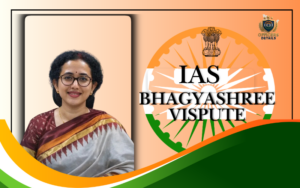
Becoming an IAS officer is considered one of the biggest achievements for any UPSC aspirant because the position carries respect, responsibility, and the opportunity to improve public administration. officersdetails.com provides useful information about government careers, and understanding the actual role of an IAS officer helps people separate facts from common misconceptions.
Many believe the power of an IAS officer comes only from the official designation. That idea is incomplete. Real authority comes from the responsibility to implement government policies, supervise administration, solve public problems, and ensure that every department performs according to law. Every decision must follow legal procedures, making the role both powerful and highly accountable.
Beginning Of Authority
The journey of an IAS officer starts after successfully clearing the Civil Services Examination conducted by UPSC. After training, officers receive their first field postings where they begin learning practical administration.
The authority of every IAS officer depends on the position assigned by the government. A newly appointed officer has fewer administrative powers compared to senior officers serving as District Magistrates, Commissioners, or Chief Secretaries.
Experience gradually expands both authority and responsibility.
Importance In Governance
Government policies become meaningful only when they are properly implemented.
IAS officers act as the connecting link between policymakers and the public. They ensure that development projects, welfare programs, infrastructure plans, and administrative decisions reach people in an organized and transparent manner.
Without capable administrators, even well-designed policies may fail during implementation.
That makes the role extremely important.
District Administration Leadership
One of the most influential positions in an IAS career is the District Magistrate.
The District Magistrate supervises nearly every major administrative activity within the district. Education, healthcare, revenue, disaster management, elections, public grievances, rural development, urban planning, and welfare schemes all come under regular administrative monitoring.
Citizens often view the District Magistrate as the face of the government in their district.
The role demands continuous coordination.
Power Through Responsibility
People frequently ask whether IAS officers are among the most powerful officials in India.
The answer depends on how power is understood.
Administrative power is not about giving orders without limits. It is about making lawful decisions, managing government resources, protecting public interests, and ensuring administrative systems function smoothly.
Every important decision must remain within legal and constitutional boundaries.
Responsible authority is the true strength of the post.
Revenue Administration Duties
Revenue administration remains one of the oldest responsibilities handled by IAS officers.
Land records, land acquisition, government property protection, revenue collection, compensation matters, and administrative land disputes require regular supervision.
Many large infrastructure projects cannot begin without efficient revenue administration.
Roads, airports, railways, industries, and public institutions depend upon proper coordination.
The responsibility carries long-term impact.
Law And Order Coordination
The District Magistrate plays an important role in maintaining peace and public order.
Although police officers conduct law enforcement operations, IAS officers coordinate administrative responses during elections, festivals, protests, disasters, and emergency situations.
Several legal provisions authorize the District Magistrate to issue preventive administrative orders whenever public safety requires immediate action.
Careful judgment remains essential.
Public Welfare Monitoring
India operates numerous welfare schemes benefiting millions of citizens.
Housing assistance.
Employment programs.
Food distribution.
Healthcare services.
Education support.
Women empowerment.
Agricultural assistance.
Social security benefits.
IAS officers regularly monitor these programs to ensure proper implementation.
Regular inspections and reviews improve accountability.
Development Project Supervision
Development work forms a major part of administrative responsibilities.
Construction of schools, hospitals, bridges, roads, irrigation systems, public offices, digital service centers, and sanitation facilities requires continuous monitoring.
IAS officers coordinate between engineers, contractors, finance departments, local authorities, and government agencies.
Project delays often require immediate administrative intervention.
Efficient coordination saves both time and public money.
Financial Management Skills
Public funds require careful management.
Senior IAS officers supervise government budgets, expenditure approvals, financial audits, procurement systems, project financing, and resource allocation.
Every financial decision follows established procedures.
Transparency protects public trust.
Proper documentation strengthens accountability.
Financial discipline remains one of the most important responsibilities throughout an officer’s career.
Disaster Management Leadership
Natural disasters create unpredictable administrative challenges.
Floods.
Cyclones.
Earthquakes.
Heatwaves.
Pandemics.
Industrial accidents.
Drought conditions.
During emergencies, IAS officers coordinate rescue operations, relief distribution, healthcare support, temporary shelters, transportation, communication systems, and rehabilitation efforts.
Fast coordination often reduces suffering considerably.
Preparedness remains equally important.
Election Administration Work
Free and fair elections require extensive planning.
IAS officers supervise polling arrangements, manpower deployment, logistics, security coordination, electronic voting machine management, counting centers, and compliance with Election Commission guidelines.
Election duties require complete political neutrality.
Professional conduct remains under close public observation during this period.
Administrative precision becomes essential.
Leadership Beyond Office
Leadership is not measured by the size of an office.
IAS officers lead multidisciplinary teams consisting of engineers, doctors, education officials, financial experts, municipal officers, agriculture specialists, and technical staff.
Different departments have different priorities.
Bringing everyone together toward a common administrative goal requires excellent leadership and communication skills.
Respect cannot be demanded.
It must be earned.
Citizen Centric Approach
An effective administrator always keeps citizens at the center of governance.
People approach government offices seeking practical solutions rather than complicated procedures.
An IAS officer regularly interacts with farmers, students, entrepreneurs, senior citizens, social organizations, business owners, and local communities.
Listening carefully often provides better solutions than making quick assumptions.
Public confidence develops through accessibility.
Technology Driven Governance
Administrative systems continue becoming more digital every year.
Modern IAS officers supervise online grievance portals, electronic office systems, digital documentation, biometric attendance, online procurement, data dashboards, digital payments, and citizen service platforms.
Technology improves efficiency.
It also increases transparency.
Future governance will depend even more on digital innovation.
Continuous learning therefore remains necessary.
Career Growth Opportunities
The IAS offers a wide range of professional opportunities.
An officer generally progresses through several important positions during the career.
Assistant Collector.
Sub-Divisional Magistrate.
Additional District Magistrate.
District Magistrate.
Divisional Commissioner.
Secretary.
Principal Secretary.
Additional Chief Secretary.
Chief Secretary.
Many officers also serve in central ministries, international organizations, constitutional institutions, and public sector enterprises.
Career diversity remains one of the biggest strengths of the service.
Professional Values Matter
Integrity remains the foundation of public administration.
An IAS officer must demonstrate honesty, fairness, discipline, transparency, impartiality, and commitment toward constitutional values.
Authority without ethics damages public trust.
Professional values strengthen administrative credibility.
Every officer is expected to protect public interest above personal preferences.
That responsibility never disappears.
Daily Administrative Challenges
Administrative work rarely follows a predictable routine.
One day may involve flood preparedness.
Another may focus on healthcare inspections.
Unexpected law and order situations can arise without warning.
Court directions may require immediate compliance.
Development projects often demand urgent reviews.
The workload remains dynamic throughout the year.
Adaptability becomes an essential professional skill.
Personal Qualities Required
Academic knowledge alone cannot create an effective administrator.
Successful IAS officers usually possess patience, resilience, confidence, emotional intelligence, analytical thinking, negotiation skills, communication ability, decision-making capacity, and willingness to learn continuously.
Different districts require different leadership approaches.
Flexibility improves administrative effectiveness.
Experience gradually strengthens judgment.
Why Society Respects IAS Officers
The respect associated with the IAS comes from service rather than status.
Every successful administrative decision improves governance, strengthens institutions, and benefits society.
People remember officers who solve public problems honestly and efficiently.
Buildings may eventually change.
Governments may also change.
Good governance always leaves a lasting impact.
That remains the true legacy of an outstanding IAS officer.
Call To Action
If you are interested in learning more about IAS officers, UPSC careers, government administration, leadership roles, and public service responsibilities, continue exploring trusted educational resources and stay updated with the latest civil service information to strengthen your knowledge and career planning.
Read also:-
