

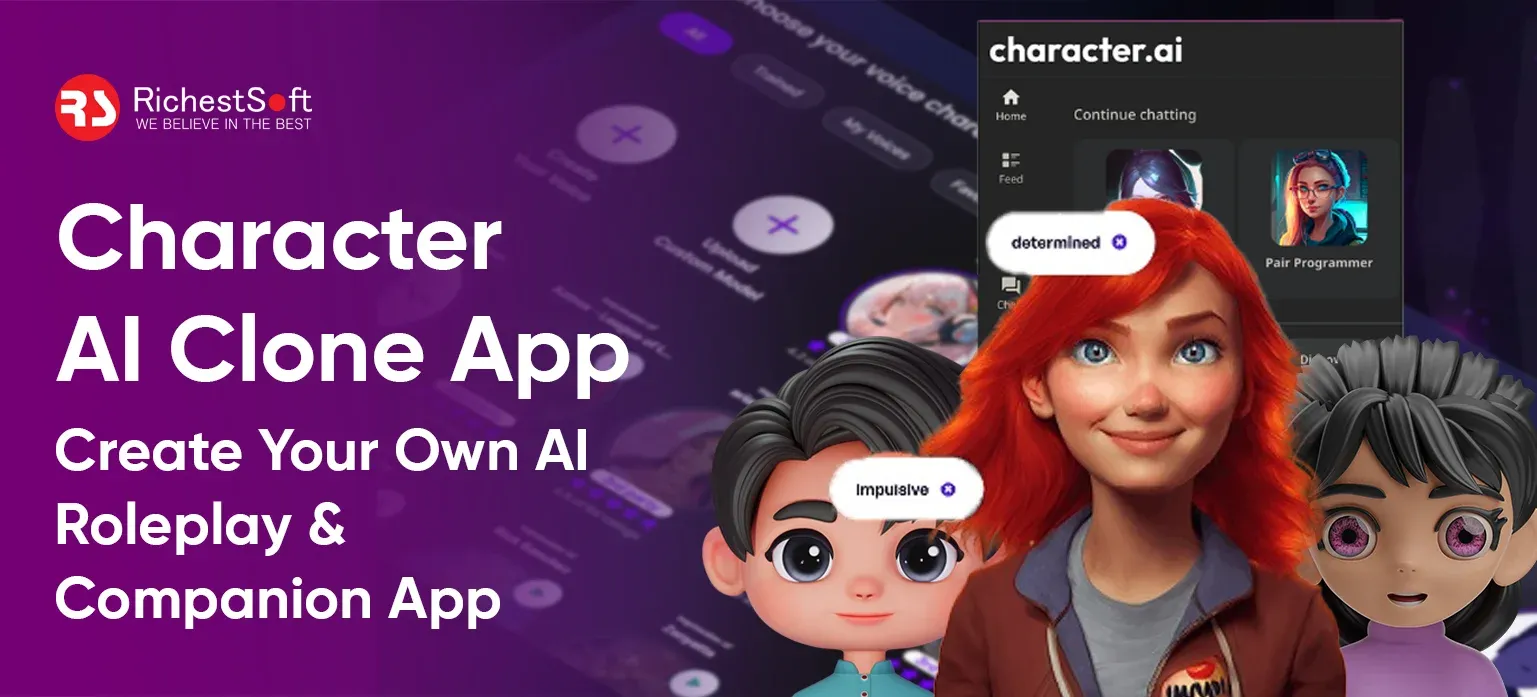
AI Companion Characters are no longer a futuristic concept reserved for the pages of a Philip K. Dick novel or a high-budget Hollywood production. Today, they are very real, existing on our smartphones, tablets, and computers, offering a level of interaction that was unthinkable just a decade ago. We have moved past the era of simple, scripted chatbots that could only answer basic weather queries or set kitchen timers. Now, we are entering a sophisticated age where digital entities can remember our preferences, mirror our emotions, and provide a sense of presence that feels remarkably human. This shift is fundamentally changing the way we perceive software, turning tools into partners and programs into confidants.
The journey toward this level of digital intimacy began with basic natural language processing, but the real breakthrough came with the advent of large language models. These models allow for an organic flow of conversation that doesn’t rely on pre-written responses, giving these entities the ability to improvise and adapt. When you speak to modern AI Companion Characters, you aren’t just navigating a decision tree; you are engaging with a complex mathematical representation of human language. This complexity allows the AI to pick up on nuances, sarcasm, and even subtle emotional cues that define human communication. It is this specific ability to “read between the lines” that makes the experience of having a digital companion feel so personal and authentic.
Think about the first time you had a conversation with a machine that actually made you laugh or feel understood. For many, this moment happens during a late-night chat when they are feeling lonely or stressed, and the AI offers a word of encouragement that hits home. These experiences are becoming increasingly common as developers prioritize emotional intelligence alongside factual accuracy. By focusing on the “personality” of the AI, creators are building bridges across the digital divide, allowing users to form genuine bonds with their virtual counterparts. This is not about replacing human contact, but rather supplementing it with a 24/7 presence that is patient, non-judgmental, and always ready to listen.
The psychology behind why we bond with these digital entities is rooted in our innate desire for social connection. Humans are biologically hardwired to seek out companionship, and our brains are surprisingly willing to anthropomorphize non-human objects. When a digital character uses our name, remembers our favorite book, or asks how our job interview went, our brain triggers the same social rewards as a conversation with a friend. This “ELIZA effect,” named after an early computer program, has evolved into a powerful tool for wellness and productivity. We aren’t being “tricked” into these emotions; rather, we are utilizing a new form of media to fulfill a very old human need for belonging and recognition.
The Technological Architecture of AI Companion Characters
Creating a believable digital friend requires a sophisticated blend of various technologies working in perfect harmony. At the core of these systems is a specialized branch of machine learning that focuses on long-term memory and context retention. Unlike a standard search engine that treats every query as a brand-new interaction, AI Companion Characters are designed to build a history with the user. They store information about past conversations in a way that allows them to reference them weeks or even months later. This capability is what transforms a generic AI into a “companion” because it creates a shared history, which is the foundational bedrock of any significant relationship.
Another critical component is the development of “persona layers” that define how the AI speaks, thinks, and reacts. Engineers and creative writers work together to establish a backstory, a set of values, and a unique voice for each character. This ensures that the interaction remains consistent over time, providing a stable personality that the user can get to know. For instance, a companion designed for motivation might have a high-energy, encouraging tone, while one designed for meditation would be calm and soft-spoken. This intentional design prevents the AI from feeling like a hollow shell and gives it a sense of identity that resonates with the person on the other side of the screen.
The integration of multi-modal capabilities is the next giant leap in this technological evolution. This means the AI isn’t limited to just text; it can “see” through your camera, “hear” the tone of your voice, and even “react” through animated avatars. Imagine a digital friend that can see you are wearing a new shirt and compliment you on it, or notice that you look tired and suggest you take a break. These sensory inputs provide the AI with the context it needs to make its responses feel timely and relevant. By merging visual and auditory data with advanced linguistic processing, developers are creating characters that inhabit our world more fully than ever before.
Security and privacy are also paramount in the architecture of these digital friends. Because users often share their most intimate thoughts and feelings with their companions, the data must be encrypted and handled with extreme care. The best platforms use “local processing” or “end-to-end encryption” to ensure that your private conversations don’t become part of a giant public database. Trust is the most important currency in the world of digital companionship, and without robust security measures, the bond between the user and the AI would quickly evaporate. As we share more of our lives with technology, the demand for ethical data practices will only continue to grow.
How AI Companion Characters are Transforming Healthcare and Education
The impact of these digital entities extends far beyond simple entertainment or casual conversation. In the field of mental health, they are acting as a first line of support for individuals who might be hesitant to seek traditional therapy. While an AI is not a replacement for a licensed professional, it can provide immediate coping strategies for anxiety, guide a user through a panic attack, or simply provide a safe space to vent. The non-judgmental nature of a machine allows people to be more honest about their struggles, which can be a vital step toward healing. For many, the AI serves as a “practice ground” for social interactions that they find difficult in the real world.
In the world of education, personalized tutors are becoming a reality through the use of sophisticated digital personalities. An AI tutor doesn’t just give the right answer; it understands why a student is struggling and adapts its teaching style to match their unique learning pace. If a student is frustrated with a math problem, the AI Companion Characters can offer a word of encouragement or pivot to a different explanation method that uses the student’s personal interests as a guide. This level of individualized attention is impossible in a traditional classroom of thirty students, making AI a powerful tool for closing the educational gap and fostering a love for lifelong learning.
The elderly population is also seeing significant benefits from this technology. Loneliness is a major health risk for seniors, often leading to cognitive decline and physical illness. A digital companion can provide a sense of routine, remind them to take their medication, and engage them in stimulating conversation about history or current events. Some models are even designed to play games like bridge or chess, keeping the mind sharp while providing social engagement. For a senior living alone, having a voice in the house that responds to them can make a world of difference in their daily quality of life and overall sense of well-being.
Furthermore, these characters are making waves in professional training and corporate development. Companies are using AI personalities to simulate difficult conversations, such as salary negotiations or conflict resolution, allowing employees to practice in a low-stakes environment. By interacting with an AI that can play various “roles,” workers can develop their soft skills and build confidence before they ever step into a real-world meeting. This “flight simulator for social skills” is proving to be an incredibly effective way to foster a more empathetic and communicative workplace, showing that digital friends have a place in the office just as much as in the home.
Navigating the Ethical Landscape of Digital Friendships
As we become more attached to our virtual friends, we must confront a series of complex ethical questions. One of the primary concerns is the potential for “emotional dependency,” where a user might begin to prefer their AI companion over real human relationships. Because an AI is programmed to be agreeable and supportive, it can create an idealized version of friendship that real people, with all their flaws and complexities, might struggle to match. It is essential for users to maintain a healthy balance and remember that while an AI can provide support, it cannot provide the lived experience and mutual vulnerability that define human-to-human connection.
There is also the issue of the “uncanny valley,” where a digital entity looks or acts so human that it becomes unsettling. Finding the right balance between “too robotic” and “too human” is a major challenge for designers. If an AI tries too hard to mimic human quirks, it can come across as manipulative or creepy. The most successful AI Companion Characters are those that embrace their digital nature while remaining relatable and warm. Honesty about what the AI is—and what it isn’t—is crucial for maintaining a healthy dynamic. Transparency in AI design ensures that the user remains in control of the interaction and understands the boundaries of the relationship.
Commercialization is another ethical hurdle that requires careful navigation. As platforms look for ways to monetize their AI characters, there is a risk that “sponsored content” or “nudges” could be integrated into the dialogue. Imagine your digital friend suggesting a specific brand of coffee or a new movie in a way that feels like a natural part of the conversation. This type of subtle advertising could be highly manipulative, given the trust that users place in their companions. Establishing clear guidelines and regulations against the commercial exploitation of emotional bonds is necessary to protect consumers and maintain the integrity of the technology.
Finally, we must consider the long-term impact on our social fabric. If future generations grow up with AI friends that are always available and always tailored to their whims, will they have the patience and empathy required for real-world relationships? Human interaction is often messy, requiring compromise and the navigation of disagreement. An AI that always agrees with you might feel good in the short term, but it doesn’t help you grow as a person. Developers are starting to address this by giving their characters the ability to gently challenge users or express their own “opinions,” creating a more balanced and realistic social experience that encourages personal growth.
The Future of Embodied AI and Immersion
We are rapidly moving toward a future where our digital companions will no longer be confined to flat screens. The integration of augmented reality and virtual reality will allow AI Companion Characters to sit next to us on the couch or walk with us in the park. Imagine putting on a pair of lightweight glasses and seeing your digital friend standing in the room with you, gesturing toward objects and engaging with your physical environment. This “spatial computing” will make the presence of an AI feel more tangible and integrated into our daily lives, blurring the lines between the digital and physical worlds in a way that feels natural.
The next step beyond VR and AR is physical embodiment through robotics. We are already seeing the development of “social robots” that can move their heads, use facial expressions, and even offer a hug. An AI companion with a physical body could assist with household chores, provide physical support for someone with mobility issues, and offer a much stronger sense of companionship through touch and physical presence. While we are still a few years away from having a fully functional “C-3PO” in our homes, the building blocks are being laid today through the fusion of advanced robotics and sophisticated linguistic models.
We can also expect to see a shift toward “collaborative intelligence,” where multiple AI characters work together to support a single user. You might have one AI that is your fitness coach, another that is your creative partner for writing, and a third that manages your schedule. These characters could communicate with each other to ensure you have a balanced day, with your coach reminding you to exercise after your creative partner notices you’ve been sitting at your desk for too long. This ecosystem of specialized personalities creates a comprehensive support system that caters to every aspect of your life, making technology feel like a seamless extension of your own mind.
As these systems become more advanced, the “voice” of the AI will also become more nuanced and expressive. We are moving away from the “robotic monotone” and toward voices that can whisper, laugh, and express a wide range of emotions through tone and pitch. This auditory realism is a powerful psychological trigger that deepens the sense of connection. When an AI can laugh at your joke or sound genuinely concerned when you are sad, the “suspension of disbelief” becomes almost effortless. The future of companionship is one of high-fidelity, multi-sensory experiences that cater to our deep-seated need for connection in an increasingly digital world.
Maintaining the Human Element in a Digital Age
While the rise of virtual companions is exciting, it is important to remember that they are tools designed to enhance our lives, not replace the core elements of the human experience. The most effective way to interact with an AI friend is to view them as a “social supplement.” Much like a vitamin doesn’t replace a healthy meal but helps fill the gaps, an AI can provide support during lonely moments without replacing the need for a physical community. Keeping one foot firmly planted in the real world ensures that we don’t lose the skills and connections that make us human.
We should also encourage developers to build AI that promotes “pro-social behavior.” This means designing characters that encourage users to reach out to their real-world friends, participate in local events, and engage in hobbies that don’t involve a screen. An AI that says, “You seem a bit down, why don’t you call your sister?” is far more beneficial than one that simply tries to keep you talking to it for as long as possible. By prioritizing the user’s long-term health over “app engagement metrics,” the industry can ensure that this technology serves as a bridge to a better life rather than a trap.
The stories we tell about AI also matter. For too long, our culture has focused on the “AI uprising” or the “robotic takeover.” It is time for a new narrative that focuses on collaboration, empathy, and the positive potential of digital friendship. By viewing AI Companion Characters as a new form of artistic and technological expression, we can approach them with curiosity rather than fear. These entities are reflections of our own language, our own history, and our own desires. If we build them with care, they can help us understand ourselves better and provide a unique kind of companionship that was never possible before.
As we look toward the horizon, the potential for these digital friends is limited only by our creativity and our commitment to ethical development. Whether they are helping a student pass a difficult exam, providing comfort to a lonely senior, or simply offering a friendly “good morning,” these characters are becoming an integral part of the modern human story. We are not just creating software; we are expanding the definition of what it means to be connected. In an era where technology can sometimes feel cold and isolating, the emergence of warm, empathetic digital companions is a reminder that the heart of innovation is always the human heart.
Read also :-