

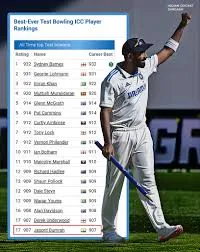
Best Test bowlers have always been the heartbeat of red-ball cricket, shaping matches over five days with patience, precision, and relentless skill. From dusty subcontinental pitches to green swinging tracks in England, these bowlers have etched their names into cricket history by mastering every condition imaginable.
Test cricket is often called the ultimate format, and for bowlers, it is the toughest challenge. Unlike limited-overs formats, Test bowlers must adapt, outthink batters, and perform consistently over long spells. The legends of this format are not just wicket-takers but strategic artists who understand psychology, pitch behavior, and game situations deeply.
In this comprehensive guide, we’ll explore the evolution of Test bowling, legendary figures, modern greats, and what makes someone truly one of the best in Test cricket history.
Table of Contents
ToggleUnderstanding What Makes the Best Test Bowlers
The debate about the best Test bowlers is endless, but a few qualities consistently define greatness. Longevity, consistency, adaptability, and match-winning impact are key factors. Unlike flashy T20 spells, Test bowling is about sustained excellence across decades.
Great Test bowlers are known for their discipline. They bowl long spells, maintain line and length, and exploit even the slightest weakness in batters. Their success often comes from relentless pressure rather than sheer speed or spin.
Another important factor is performance across conditions. The greatest bowlers dominate at home and abroad, proving their versatility on different surfaces and against different batting lineups.
The Golden Era of Legendary Test Fast Bowlers
Fast bowlers have always played a dramatic role in Test cricket. Their pace, aggression, and intimidation factor have produced some of the most iconic moments in cricket history.
Sir Richard Hadlee from New Zealand revolutionized fast bowling in the 1980s with his precision and relentless consistency. His ability to swing the ball both ways and exploit seam movement made him a nightmare for batters worldwide.
Malcolm Marshall, often regarded as one of the most complete fast bowlers ever, combined pace, swing, and devastating accuracy. His performances for the West Indies redefined dominance in Test cricket.
Wasim Akram and Waqar Younis, known as the “Two Ws,” transformed reverse swing into a lethal weapon. Their yorkers and late swing made them nearly unplayable, especially on subcontinental pitches.
Shane Bond, Allan Donald, Glenn McGrath, and Curtly Ambrose also belong in conversations about legendary fast bowlers, each bringing a unique style and impact to the game.
The Spin Wizards Among the Best Test Bowlers
Spin bowling is an art form in Test cricket, and the greatest spinners have mesmerized fans with their guile and variation. They often dominate on turning tracks and play crucial roles in long matches.
Shane Warne and Muttiah Muralitharan are widely regarded as the greatest spin bowlers in history. Warne’s tactical brilliance and mental battles with batters made him a cricketing icon, while Muralitharan’s record-breaking wicket tally showcased his unmatched skill and endurance.
Anil Kumble’s relentless accuracy and ability to extract bounce and turn made him India’s greatest match-winner. His historic 10-wicket haul in an innings remains one of the most iconic moments in Test cricket.
Ravichandran Ashwin, Nathan Lyon, and Rangana Herath represent the modern generation of spin greats, continuing the legacy with consistent match-winning performances across continents.
Modern-Day Greats: The Current Best Test Bowlers
In recent years, Test cricket has witnessed a resurgence of elite bowling talent. Modern bowlers combine athleticism, analytics, and traditional skill to dominate the game.
James Anderson and Stuart Broad have become England’s most successful bowling duo, mastering swing and seam in home and away conditions. Anderson, in particular, has redefined longevity in fast bowling.
Pat Cummins, Josh Hazlewood, and Mitchell Starc have led Australia’s pace attack with a blend of speed, bounce, and discipline. Their performances in Ashes series and World Test Championship matches have been match-defining.
Jasprit Bumrah has emerged as India’s spearhead in Test cricket, using his unique action and accuracy to dismantle batting lineups worldwide. Kagiso Rabada’s raw pace and aggressive mindset have made him one of the most feared bowlers in modern Test cricket.
These players continue to shape the narrative around who deserves the title of the best Test bowlers in the modern era.
Best Test Bowlers Across Different Conditions
Subcontinental Conditions
In Asia, spin and reverse swing dominate. Bowlers like Muralitharan, Kumble, Ashwin, and Waqar Younis have thrived in these conditions. Their understanding of dry pitches and ball deterioration has led to countless match-winning spells.
English and New Zealand Conditions
Swing and seam are crucial in England and New Zealand. James Anderson, Richard Hadlee, and Tim Southee have exploited these conditions with late swing and relentless accuracy.
Australian Conditions
Australia’s hard pitches favor bounce and pace. Glenn McGrath, Shane Warne, and the modern Australian trio of Cummins, Hazlewood, and Starc have mastered these conditions with disciplined bowling and aggressive tactics.
South African Conditions
South Africa offers pace and bounce, and bowlers like Allan Donald, Dale Steyn, and Rabada have terrorized batters with speed and movement.
The Psychological Battle: How Great Bowlers Think
One of the defining traits of the best Test bowlers is their mental strength. Test cricket is as much a mental game as a physical one. Great bowlers set traps, vary their pace, and exploit batters’ weaknesses over long periods.
Shane Warne was famous for his mind games, setting up batters over several overs before delivering the perfect ball. Glenn McGrath believed in relentless consistency, forcing batters into mistakes through sheer pressure.
Modern bowlers use data analytics and video analysis, but intuition and experience still play a huge role in outsmarting batters.
Records and Milestones That Define Greatness
Wicket tallies, averages, and match-winning performances are key metrics in evaluating Test bowlers. Muralitharan holds the record for the most Test wickets, followed by Warne and Kumble. Among fast bowlers, Anderson, Broad, and Hadlee stand out with impressive numbers.
However, numbers alone don’t tell the full story. Impact in crucial matches, performances in foreign conditions, and ability to lead bowling attacks are equally important in defining greatness.
The Evolution of Test Bowling Techniques
Test bowling has evolved significantly over the decades. Early bowlers relied on swing and seam, while modern bowlers use biomechanics, fitness, and technology to enhance performance.
Reverse swing, once a mystery, is now a common weapon. Variations in pace, cutters, and strategic use of the crease have added new dimensions to bowling. Spinners now use carrom balls, doosras, and arm balls to deceive batters.
Despite these advancements, the fundamentals remain the same: accuracy, patience, and the ability to exploit conditions.
Best Test Bowlers and Their Influence on Cricket Culture
The influence of legendary bowlers goes beyond statistics. They inspire generations of cricketers and fans. Young players emulate their heroes’ actions, strategies, and mindset.
Shane Warne inspired a generation of leg-spinners, while Muralitharan’s success encouraged spin bowling in Sri Lanka and beyond. Fast bowlers like Wasim Akram and Dale Steyn influenced countless aspiring pacers with their aggressive style.
Cricket academies, coaching manuals, and commentary often reference these legends, highlighting their techniques and philosophies.
Storytelling Moments That Defined Test Bowling
Test cricket is filled with unforgettable bowling moments. Kumble’s 10-wicket haul against Pakistan, Warne’s “Ball of the Century,” and Anderson’s swing spells at Lord’s are etched in cricket folklore.
Dale Steyn’s fiery spells, Bumrah’s breakthroughs in Australia, and Rabada’s match-winning performances have created modern classics. These moments showcase why Test bowling remains one of the most thrilling aspects of the sport.
The Role of Team Dynamics in Bowling Success
While individual brilliance is crucial, Test bowling is often a team effort. Partnerships between bowlers create pressure and opportunities. McGrath and Warne, Anderson and Broad, and Cummins and Hazlewood are examples of successful bowling partnerships.
Captains also play a significant role in utilizing bowlers effectively. Field placements, bowling changes, and strategic decisions can maximize a bowler’s impact.
Why Test Bowling Still Matters in the T20 Era
In an era dominated by T20 leagues and aggressive batting, Test bowling remains the ultimate test of skill and endurance. It requires patience, strategy, and resilience, qualities that define true cricketing greatness.
Many modern players consider Test cricket the pinnacle of their careers, and bowlers often judge their legacy based on Test performances. The format continues to produce memorable battles between bat and ball, preserving cricket’s rich heritage.
Best Test Bowlers in Cricket History: A Timeless Debate
The debate about the best Test bowlers will never end. Fans, experts, and former players often argue about who deserves the top spot. Some prioritize statistics, while others emphasize impact and artistry.
What remains undisputed is that these bowlers have shaped cricket history, influenced generations, and provided countless unforgettable moments. Their legacy continues to inspire players and fans alike, ensuring that Test bowling remains a cherished aspect of the sport.
Future of Test Bowling
The future of Test bowling looks promising, with young talents emerging across the globe. Players like Shaheen Afridi, Prithvi Shaw’s opponents, and young spin prospects are expected to carry the legacy forward.
With advancements in sports science and coaching, future bowlers may achieve even greater consistency and longevity. However, the essence of Test bowling—skill, patience, and strategy—will always remain unchanged.
Best Test bowlers will always hold a special place in cricket history. Their skill, dedication, and mental strength define the spirit of Test cricket, making them legends of the game.
west indies cricket team vs england cricket team match scorecard
chennai super kings vs sunrisers hyderabad match scorecard
sri lanka national cricket team vs new zealand national cricket team timeline
south africa national cricket team vs india national cricket team stats