

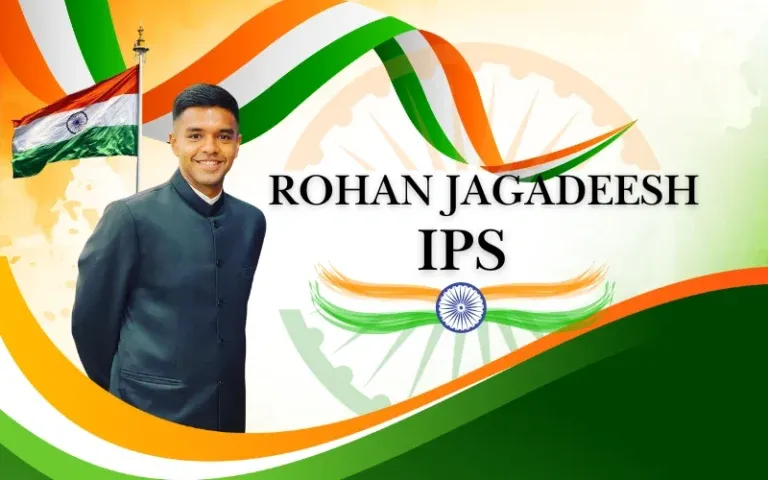
IPS As A Career
The Indian Police Service is one of the most respected careers in the country and is known for its role in maintaining law, protecting citizens, and strengthening the justice system. Every IPS officer is expected to lead police departments with professionalism, honesty, and confidence. It is a career that offers both authority and responsibility, making it an attractive option for thousands of UPSC aspirants every year.
Many students search for IPS Corner because they want complete information about the examination process, eligibility, training, promotion system, and career opportunities before beginning their preparation. Having reliable knowledge from the beginning makes the preparation journey much more organized.
Required Qualifications
Graduation from a recognized university is the minimum educational qualification for appearing in the Civil Services Examination. Candidates from all academic backgrounds, including science, commerce, arts, engineering, and law, are eligible to apply.
The minimum age for the examination is generally twenty-one years, while the upper age limit depends on the category under government rules. Candidates must also satisfy the prescribed medical and physical fitness standards because the profession demands physical endurance and mental strength.
Before submitting the application form, candidates should carefully read the latest UPSC notification for updated eligibility conditions.
Selection Stages
The recruitment process consists of three important phases conducted by the Union Public Service Commission.
The first stage is the Preliminary Examination. It includes objective questions that test general studies and aptitude. Candidates who qualify move to the Main Examination.
The Main Examination consists of descriptive papers that evaluate analytical thinking, subject knowledge, writing ability, and understanding of administrative issues. Candidates who clear this stage appear for the Personality Test.
The interview panel assesses confidence, leadership, communication skills, ethical values, awareness of current affairs, and suitability for public service. Final selection is based on overall performance in the Main Examination and interview.
Training Program
Professional training begins after the final selection. During this period, officers receive both academic instruction and practical field experience.
The syllabus includes criminal law, police administration, investigation techniques, forensic science, cybercrime, disaster management, ethics, and leadership. Physical activities include endurance exercises, swimming, weapon training, horse riding, and tactical operations.
The objective of training is to prepare officers to perform efficiently under challenging circumstances while maintaining professionalism and discipline.
Responsibilities Of Officers
An IPS officer performs several important administrative and operational duties. Responsibilities include supervising police stations, monitoring criminal investigations, maintaining public order, handling emergency situations, and coordinating with government departments.
Some officers work in intelligence agencies, cybercrime cells, anti-terror squads, economic offence wings, and traffic management departments. Others receive opportunities to serve in central organizations responsible for national security and criminal investigations.
Every responsibility requires fairness, accountability, and strong decision-making skills.
Promotion Opportunities
Career progression in the Indian Police Service follows a structured system. Officers begin with probation and gradually receive higher administrative responsibilities through promotions.
The promotion hierarchy generally includes Superintendent of Police, Deputy Inspector General, Inspector General, Additional Director General, and Director General of Police.
Experienced officers may also serve in organizations such as intelligence agencies, border security forces, investigation departments, and national disaster management authorities.
Effective Study Plan
Success in UPSC depends on disciplined preparation rather than shortcuts. Candidates should begin by understanding the examination syllabus and selecting reliable study materials.
Reading newspapers every day helps improve awareness of current affairs, governance, economy, international relations, and science. Standard books should be revised regularly to strengthen concepts.
Answer-writing practice improves descriptive writing skills, while mock examinations help candidates improve time management and identify weak areas.
Many serious aspirants use IPS Corner resources to organize their preparation strategy and understand different aspects of the examination process.
Skills For Success
Leadership is one of the most important qualities expected from an IPS officer. Strong communication skills help officers interact with citizens, government officials, and police personnel in a professional manner.
Integrity, patience, emotional intelligence, discipline, and problem-solving ability are equally important. Officers often work under pressure where balanced judgment and ethical decision-making become essential.
Continuous learning also helps officers remain updated with modern policing methods and technological developments.
Future Scope
Modern policing has expanded beyond traditional crime investigation. Cyber security, artificial intelligence, digital evidence, forensic science, financial crime investigation, and technology-driven policing now play a major role in law enforcement.
IPS officers who continue developing new skills often receive opportunities to work in specialized departments and national-level organizations. Continuous professional growth helps officers contribute more effectively to public safety.
Conclusion
The Indian Police Service offers a meaningful career for individuals who wish to combine leadership with public service and administrative responsibility. officersdetails.com provides valuable information for readers interested in civil services, competitive examinations, and government career guidance. Consistent preparation, regular revision, physical fitness, and a commitment to continuous learning remain the strongest foundations for success. Stay determined, trust your preparation, and continue working steadily toward your dream of becoming an IPS officer.
Read also :-
ips manoj kumar sharma posting details