

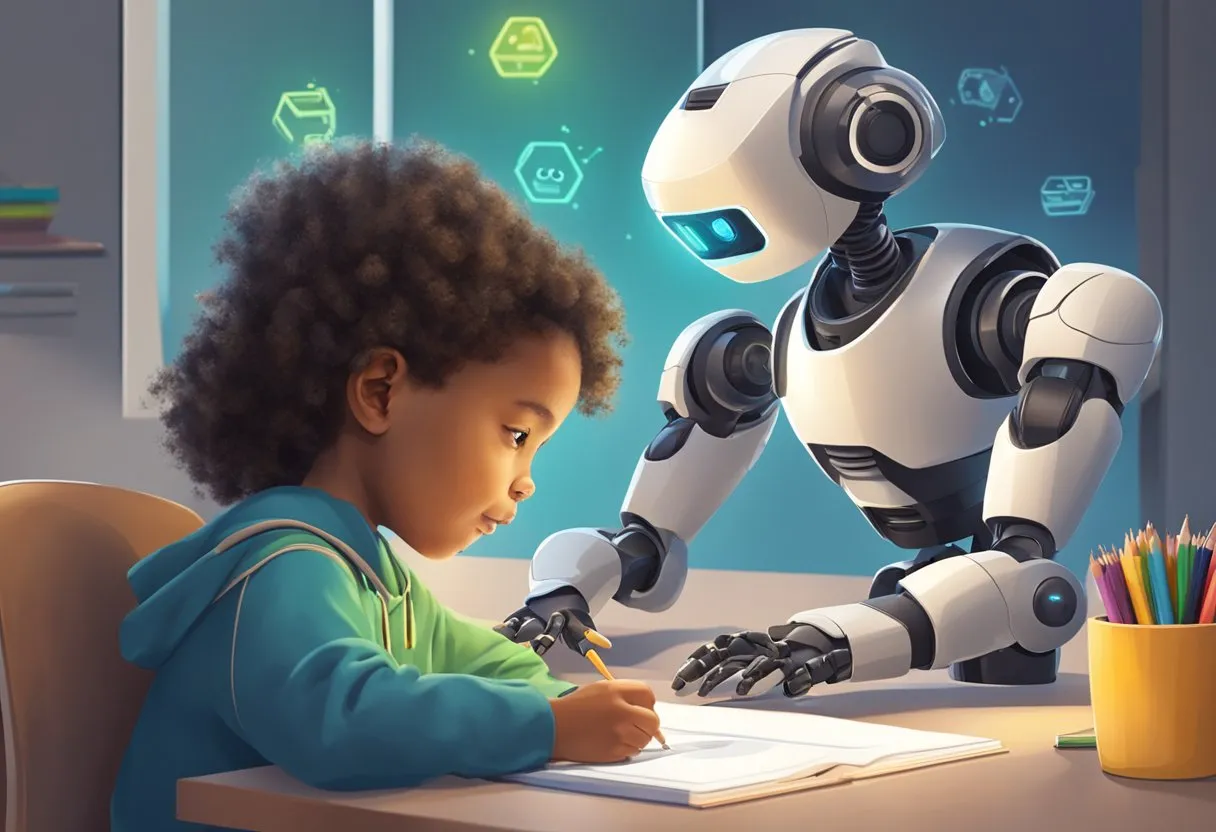
AI homework assistants are changing how students learn, revise, and complete assignments in today’s fast-paced academic world. What once required hours of textbook flipping or late-night tutoring sessions can now be supported through intelligent, adaptive tools that respond instantly to student needs.
Over the last few years, classrooms have quietly transformed. From digital whiteboards to online learning platforms, education has embraced technology. Now, artificial intelligence is stepping into the spotlight, offering personalized academic guidance in ways that were almost unimaginable a decade ago.
But are these tools simply shortcuts? Or are they becoming responsible partners in modern education?
This article explores how AI homework support systems work, their real-world impact, and how students, parents, and educators can use them responsibly.
Table of Contents
ToggleThe Rise of AI Homework Assistants in Modern Education
The demand for academic support has never been higher. Students juggle multiple subjects, extracurricular activities, part-time jobs, and social responsibilities. In this environment, traditional tutoring is not always accessible or affordable.
This is where AI homework assistants enter the picture.
These systems use machine learning and natural language processing to analyze questions, explain solutions, and adapt to a learner’s level. Platforms like Khan Academy have introduced AI-powered tutoring features, while tools such as Photomath and Grammarly provide subject-specific support.
Unlike static answer websites, AI-powered tools focus on guiding students through problem-solving steps. Instead of simply delivering results, they break down complex ideas into manageable explanations.
This shift is critical because understanding matters more than memorizing.
How AI Homework Assistants Actually Work
At their core, these tools rely on advanced algorithms trained on large educational datasets. They identify patterns in questions and match them with structured explanations.
When a student uploads a math problem or types an essay prompt, the system analyzes the input, detects key concepts, and generates a step-by-step solution. Many platforms adjust the explanation style based on the student’s past interactions.
For example, if a learner struggles with algebraic fractions, the assistant may simplify future explanations and provide additional practice examples.
This adaptive learning model mirrors one-on-one tutoring. The difference is availability. AI systems operate 24/7, offering immediate feedback.
Speed, however, is not their only advantage. Consistency plays an equally important role. Unlike human tutors who may vary in approach, AI tools follow structured methodologies aligned with curriculum standards.
Why Students Are Turning to AI Homework Assistants
A high school student preparing for exams often faces overwhelming pressure. Limited time and dense syllabi create anxiety. Many learners report feeling more comfortable asking digital tools “simple” questions they might hesitate to raise in class.
The accessibility factor is powerful. AI homework platforms remove embarrassment and allow students to learn privately.
Affordability also matters. Private tutoring sessions can be expensive. In contrast, many AI-powered systems offer free tiers or low-cost subscriptions.
There’s also the benefit of repetition. Students can request multiple explanations without fear of judgment. This encourages deeper engagement with the subject.
Parents have noticed improvements in homework efficiency. Assignments that once consumed entire evenings can now be completed with structured guidance in a fraction of the time.
The Role of AI Homework Assistants in Personalized Learning
Personalization is where these tools truly shine.
Every student learns differently. Some are visual learners, while others absorb information through step-by-step reasoning. AI systems collect interaction data and adjust responses accordingly.
Imagine two students solving the same geometry problem. One understands formulas but struggles with application. The other struggles with basic definitions. An AI-based tool can tailor explanations to each learner’s gap.
This individualized approach was once possible only through dedicated tutoring.
By analyzing mistakes, AI tools highlight recurring weaknesses. Over time, students develop self-awareness about their learning patterns.
That kind of feedback builds confidence.
Ethical Use of AI Homework Assistants
The conversation around academic integrity is essential.
Critics argue that these tools may encourage cheating. However, the responsibility lies in how students use them. When learners rely on AI solely to copy answers, they miss the educational benefit.
Educators are increasingly integrating AI literacy into classrooms. Rather than banning technology, teachers are guiding students on responsible use.
For example, some schools encourage learners to use AI tools for practice questions but require handwritten explanations in final submissions.
Transparency is key. When used as a study companion instead of a shortcut, AI enhances learning rather than undermines it.
Comparing AI Homework Assistants to Traditional Tutoring
Human tutors bring empathy, emotional intelligence, and real-time motivation. They can sense frustration and adjust tone accordingly.
AI systems, while efficient, cannot fully replicate human emotional awareness.
However, AI tools excel in availability and scalability. A student can ask 50 practice questions in one evening without scheduling sessions or worrying about hourly fees.
In reality, the most effective learning model may combine both approaches. Students can use AI for daily support and consult teachers or tutors for deeper conceptual discussions.
This blended model maximizes strengths from both worlds.
Real-Life Impact Stories
Consider a college freshman struggling with introductory statistics. Weekly lectures move quickly, and office hours are limited. By using AI-driven homework guidance, she practices problems daily and reviews mistakes immediately.
Within one semester, her test scores improve significantly.
Or think about a working parent returning to education. Balancing job responsibilities and coursework can feel overwhelming. AI tools provide late-night academic assistance when traditional support is unavailable.
These real-world scenarios highlight how technology can democratize learning opportunities.
Challenges and Limitations
Despite their advantages, AI homework platforms are not perfect.
They sometimes misinterpret ambiguous questions. Complex, open-ended assignments may receive generalized responses.
There is also the risk of overdependence. If students rely exclusively on AI-generated solutions, critical thinking skills may weaken.
Data privacy concerns are another consideration. Reputable platforms implement strict security standards, but users should always review privacy policies before sharing personal information.
Educational institutions must also ensure equal access. Not all students have reliable internet connections or devices capable of running advanced software.
Awareness of these challenges allows for more responsible adoption.
The Future of AI Homework Assistants
The evolution of AI homework assistants is accelerating rapidly.
Future systems may incorporate voice interaction, real-time concept mapping, and even augmented reality features. Imagine scanning a physics diagram and receiving interactive explanations layered over the image.
Collaboration features are also expanding. Students may soon work in AI-moderated study groups where the system identifies discussion gaps and prompts deeper analysis.
Integration with learning management systems could allow teachers to monitor progress patterns while respecting student privacy.
Artificial intelligence in education is not a passing trend. It represents a structural shift in how knowledge is delivered and consumed.
Building Trust Through EEAT Principles
Experience, expertise, authoritativeness, and trustworthiness are critical when discussing educational technology.
Experienced educators emphasize that AI should supplement, not replace, foundational learning methods. Academic researchers continue to evaluate performance outcomes linked to AI-supported study environments.
Authoritative educational organizations are investing in responsible AI frameworks to ensure accuracy and fairness.
Trust is built when platforms provide transparent methodologies, cite credible academic sources, and offer clear user guidelines.
Students and parents should choose tools developed by reputable organizations with proven track records in education technology.
How to Choose the Right AI Homework Assistants
Not every tool fits every learner.
Some platforms specialize in mathematics, while others focus on writing or science. Students should evaluate accuracy, explanation quality, interface usability, and privacy protections.
Reading user reviews and testing trial versions can help determine compatibility.
Educators may also recommend specific tools aligned with curriculum standards.
Ultimately, the best system is one that promotes understanding rather than quick answers.
The Human Element Still Matters
Technology can accelerate learning, but curiosity, discipline, and guidance remain human traits.
Teachers inspire passion. Parents provide emotional encouragement. Peers create collaborative motivation.
AI tools function best when integrated into a balanced learning ecosystem.
Students who actively engage with explanations, ask follow-up questions, and practice independently gain the most value.
The real transformation happens not when machines replace effort, but when they support it intelligently.
Academic Responsibility in a Digital Age
As AI becomes more embedded in education, digital literacy must evolve alongside it.
Students should learn how algorithms work, recognize limitations, and verify information independently.
Educational institutions are gradually adapting policies to reflect this new reality.
The goal is not restriction, but empowerment.
When learners understand how to use AI ethically and effectively, they gain both academic and technological skills essential for the future workforce.
The conversation around artificial intelligence in education will continue to expand. With thoughtful implementation, responsible usage, and ongoing evaluation, AI-powered study tools can become meaningful partners in academic success rather than controversial shortcuts.
Education has always evolved with innovation. From printed textbooks to online classrooms, each transformation reshaped how knowledge spreads.
Now, intelligent systems are becoming part of that story
are changing how students learn, revise, and complete assignments in today’s fast-paced academic world. What once required hours of textbook flipping or late-night tutoring sessions can now be supported through intelligent, adaptive tools that respond instantly to student needs.
Over the last few years, classrooms have quietly transformed. From digital whiteboards to online learning platforms, education has embraced technology. Now, artificial intelligence is stepping into the spotlight, offering personalized academic guidance in ways that were almost unimaginable a decade ago.
But are these tools simply shortcuts? Or are they becoming responsible partners in modern education?
This article explores how AI homework support systems work, their real-world impact, and how students, parents, and educators can use them responsibly.
The Rise of AI Homework Assistants in Modern Education
The demand for academic support has never been higher. Students juggle multiple subjects, extracurricular activities, part-time jobs, and social responsibilities. In this environment, traditional tutoring is not always accessible or affordable.
This is where AI homework assistants enter the picture.
These systems use machine learning and natural language processing to analyze questions, explain solutions, and adapt to a learner’s level. Platforms like Khan Academy have introduced AI-powered tutoring features, while tools such as Photomath and Grammarly provide subject-specific support.
Unlike static answer websites, AI-powered tools focus on guiding students through problem-solving steps. Instead of simply delivering results, they break down complex ideas into manageable explanations.
This shift is critical because understanding matters more than memorizing.
How AI Homework Assistants Actually Work
At their core, these tools rely on advanced algorithms trained on large educational datasets. They identify patterns in questions and match them with structured explanations.
When a student uploads a math problem or types an essay prompt, the system analyzes the input, detects key concepts, and generates a step-by-step solution. Many platforms adjust the explanation style based on the student’s past interactions.
For example, if a learner struggles with algebraic fractions, the assistant may simplify future explanations and provide additional practice examples.
This adaptive learning model mirrors one-on-one tutoring. The difference is availability. AI systems operate 24/7, offering immediate feedback.
Speed, however, is not their only advantage. Consistency plays an equally important role. Unlike human tutors who may vary in approach, AI tools follow structured methodologies aligned with curriculum standards.
Why Students Are Turning to AI Homework Assistants
A high school student preparing for exams often faces overwhelming pressure. Limited time and dense syllabi create anxiety. Many learners report feeling more comfortable asking digital tools “simple” questions they might hesitate to raise in class.
The accessibility factor is powerful. AI homework platforms remove embarrassment and allow students to learn privately.
Affordability also matters. Private tutoring sessions can be expensive. In contrast, many AI-powered systems offer free tiers or low-cost subscriptions.
There’s also the benefit of repetition. Students can request multiple explanations without fear of judgment. This encourages deeper engagement with the subject.
Parents have noticed improvements in homework efficiency. Assignments that once consumed entire evenings can now be completed with structured guidance in a fraction of the time.
The Role of AI Homework Assistants in Personalized Learning
Personalization is where these tools truly shine.
Every student learns differently. Some are visual learners, while others absorb information through step-by-step reasoning. AI systems collect interaction data and adjust responses accordingly.
Imagine two students solving the same geometry problem. One understands formulas but struggles with application. The other struggles with basic definitions. An AI-based tool can tailor explanations to each learner’s gap.
This individualized approach was once possible only through dedicated tutoring.
By analyzing mistakes, AI tools highlight recurring weaknesses. Over time, students develop self-awareness about their learning patterns.
That kind of feedback builds confidence.
Ethical Use of AI Homework Assistants
The conversation around academic integrity is essential.
Critics argue that these tools may encourage cheating. However, the responsibility lies in how students use them. When learners rely on AI solely to copy answers, they miss the educational benefit.
Educators are increasingly integrating AI literacy into classrooms. Rather than banning technology, teachers are guiding students on responsible use.
For example, some schools encourage learners to use AI tools for practice questions but require handwritten explanations in final submissions.
Transparency is key. When used as a study companion instead of a shortcut, AI enhances learning rather than undermines it.
Comparing AI Homework Assistants to Traditional Tutoring
Human tutors bring empathy, emotional intelligence, and real-time motivation. They can sense frustration and adjust tone accordingly.
AI systems, while efficient, cannot fully replicate human emotional awareness.
However, AI tools excel in availability and scalability. A student can ask 50 practice questions in one evening without scheduling sessions or worrying about hourly fees.
In reality, the most effective learning model may combine both approaches. Students can use AI for daily support and consult teachers or tutors for deeper conceptual discussions.
This blended model maximizes strengths from both worlds.
Real-Life Impact Stories
Consider a college freshman struggling with introductory statistics. Weekly lectures move quickly, and office hours are limited. By using AI-driven homework guidance, she practices problems daily and reviews mistakes immediately.
Within one semester, her test scores improve significantly.
Or think about a working parent returning to education. Balancing job responsibilities and coursework can feel overwhelming. AI tools provide late-night academic assistance when traditional support is unavailable.
These real-world scenarios highlight how technology can democratize learning opportunities.
Challenges and Limitations
Despite their advantages, AI homework platforms are not perfect.
They sometimes misinterpret ambiguous questions. Complex, open-ended assignments may receive generalized responses.
There is also the risk of overdependence. If students rely exclusively on AI-generated solutions, critical thinking skills may weaken.
Data privacy concerns are another consideration. Reputable platforms implement strict security standards, but users should always review privacy policies before sharing personal information.
Educational institutions must also ensure equal access. Not all students have reliable internet connections or devices capable of running advanced software.
Awareness of these challenges allows for more responsible adoption.
The Future of AI Homework Assistants
The evolution of AI homework assistants is accelerating rapidly.
Future systems may incorporate voice interaction, real-time concept mapping, and even augmented reality features. Imagine scanning a physics diagram and receiving interactive explanations layered over the image.
Collaboration features are also expanding. Students may soon work in AI-moderated study groups where the system identifies discussion gaps and prompts deeper analysis.
Integration with learning management systems could allow teachers to monitor progress patterns while respecting student privacy.
Artificial intelligence in education is not a passing trend. It represents a structural shift in how knowledge is delivered and consumed.
Building Trust Through EEAT Principles
Experience, expertise, authoritativeness, and trustworthiness are critical when discussing educational technology.
Experienced educators emphasize that AI should supplement, not replace, foundational learning methods. Academic researchers continue to evaluate performance outcomes linked to AI-supported study environments.
Authoritative educational organizations are investing in responsible AI frameworks to ensure accuracy and fairness.
Trust is built when platforms provide transparent methodologies, cite credible academic sources, and offer clear user guidelines.
Students and parents should choose tools developed by reputable organizations with proven track records in education technology.
How to Choose the Right AI Homework Assistants
Not every tool fits every learner.
Some platforms specialize in mathematics, while others focus on writing or science. Students should evaluate accuracy, explanation quality, interface usability, and privacy protections.
Reading user reviews and testing trial versions can help determine compatibility.
Educators may also recommend specific tools aligned with curriculum standards.
Ultimately, the best system is one that promotes understanding rather than quick answers.
The Human Element Still Matters
Technology can accelerate learning, but curiosity, discipline, and guidance remain human traits.
Teachers inspire passion. Parents provide emotional encouragement. Peers create collaborative motivation.
AI tools function best when integrated into a balanced learning ecosystem.
Students who actively engage with explanations, ask follow-up questions, and practice independently gain the most value.
The real transformation happens not when machines replace effort, but when they support it intelligently.
Academic Responsibility in a Digital Age
As AI becomes more embedded in education, digital literacy must evolve alongside it.
Students should learn how algorithms work, recognize limitations, and verify information independently.
Educational institutions are gradually adapting policies to reflect this new reality.
The goal is not restriction, but empowerment.
When learners understand how to use AI ethically and effectively, they gain both academic and technological skills essential for the future workforce.
The conversation around artificial intelligence in education will continue to expand. With thoughtful implementation, responsible usage, and ongoing evaluation, AI-powered study tools can become meaningful partners in academic success rather than controversial shortcuts.
Education has always evolved with innovation. From printed textbooks to online classrooms, each transformation reshaped how knowledge spreads.
Now, intelligent systems are becoming part of that story.
Read also :-
